
Vocational Training in Cap Bon: A Skilled Talent Pool
Public and private centres, in-demand trades, competitive costs: why Cap Bon gives businesses and investors a pool of job-ready skills.
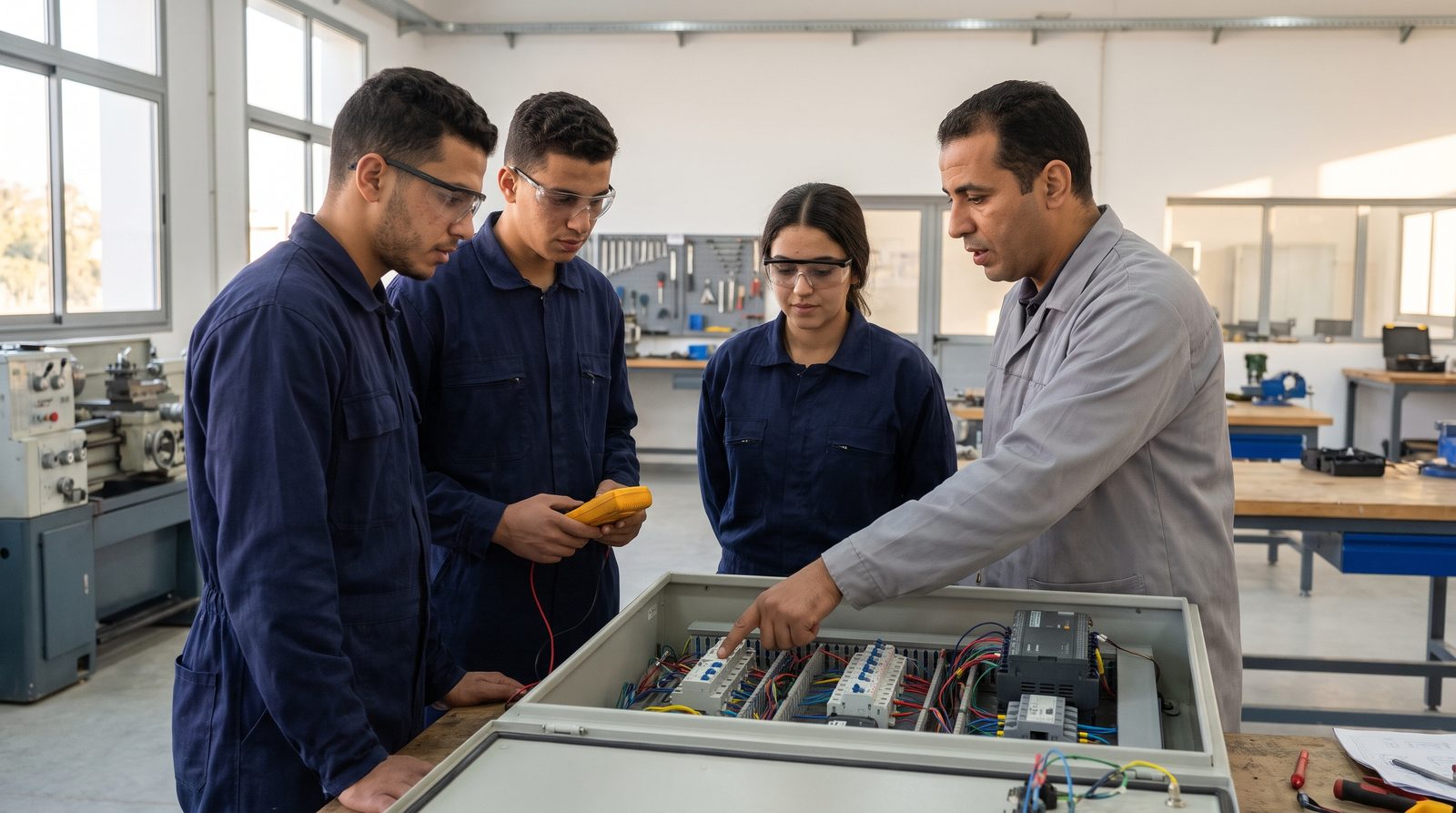
A strategic driver of business competitiveness
In an economic environment shaped by digital transformation, global trade and rapidly changing occupations, the quality of human resources has become one of the main factors in business competitiveness. The availability of a skilled, adaptable and job-ready workforce is now a decisive criterion for investors when choosing a business location.
Tunisia has made vocational training a cornerstone of its economic development policy. Through a modern network of vocational training centres across the country, it offers businesses a pool of technical skills that meet the actual needs of the labour market.
Among the most dynamic regions in this field is Cap Bon, which benefits from a strategic geographical location, a diversified industrial base and particularly well-developed training infrastructure.
Vocational training in Tunisia: an employment-oriented system
Contrary to some common misconceptions, vocational training in Tunisia is not a second-choice option. On the contrary, it offers a valuable pathway to acquiring technical skills that can be applied directly in the labour market.
The Tunisian system, overseen in particular by the Tunisian Agency for Vocational Training (ATFP), is based on a practical approach that enables learners to quickly acquire the knowledge and expertise sought by businesses.
Training is offered in many sectors:
- Mechanical and electrical industries
- Industrial maintenance
- Information and communication technologies
- Hospitality and tourism
- Agriculture and agri-food
- Commerce and management
- Construction and public works
- Renewable energy
- Healthcare and service occupations
This diversity helps meet the needs of a Tunisian economy increasingly focused on exports, innovation and high-value-added industry.
Cap Bon: a recognised hub for employment and skills
Located close to Tunis and facing the Mediterranean, the Cap Bon region is one of the country's major economic hubs.
The region is home to many businesses operating in a variety of sectors:
- Manufacturing
- Agri-food
- Automotive wiring
- Technical textiles
- Construction
- Tourism
- New technologies
To support the development of these activities, several vocational training institutions train hundreds of young people each year in specialities particularly sought after by employers.
This proximity between training centres and businesses helps achieve a better match between market needs and the skills developed.
Training centres serving businesses
Cap Bon's vocational training centres work closely with the regional business community to continually adapt their programmes to employers' requirements.
This approach enables:
- regular updates to training content;
- better employment outcomes for graduates;
- lower recruitment costs for businesses;
- faster skills development for new employees.
Trainees also benefit from periods of in-company training, allowing them to become familiar with the realities of the workplace before entering the labour market on a lasting basis.
This approach helps develop candidates who are ready to work immediately.
Meeting the needs of foreign investors
For international investors, access to skilled human resources is a decisive factor in any decision to establish operations.
Cap Bon offers several significant advantages.
A young and skilled workforce
Tunisia has a young workforce with a good level of general and technical education.
A well-established industrial culture
For several decades, the region has hosted international groups operating in demanding sectors such as automotive, electronics, technical textiles and agri-food industries.
Competitive costs
Training and recruitment costs remain particularly attractive, while maintaining a high level of skills. To estimate the cost of a new hire precisely, read our article What Is the Real Cost of an Employee in Tunisia? or try our free salary calculator.
Proximity to Europe
Thanks to its advantageous geographical location, Cap Bon enables foreign businesses to benefit from shorter logistics lead times to the main European markets.
An opportunity for young people and jobseekers
Vocational training is also a powerful tool for economic and social integration.
Every year, many young people choose this pathway to quickly acquire a qualification that is in demand in the job market.
Employment rates in certain technical specialities are particularly high, notably in:
- industrial maintenance;
- electromechanics;
- digital technologies;
- hospitality occupations;
- agri-food;
- logistics.
This demonstrates that vocational training is now a genuine passport to employment and entrepreneurship.
A forward-looking region
Faced with the challenges of the digital transition, Industry 4.0 and sustainable development, Cap Bon's vocational training centres are continuing to modernise.
New specialities are gradually emerging:
- Industrial automation
- Robotics
- Digital technologies
- Smart equipment maintenance
- Energy management
- Renewable energy
- E-commerce
- Digital marketing
This development helps anticipate businesses' future needs and strengthen the region's economic attractiveness.
Vocational training centres in Cap Bon: an ecosystem supporting employment
The governorate of Nabeul has a particularly extensive network of public and private centres covering industry, hospitality, tourism, information technology, crafts, construction and services. This provision helps make Cap Bon one of Tunisia's main skills hubs.
Main public vocational training centres
| Centre | Address | Telephone | Website |
|---|---|---|---|
| Nabeul Sectoral Training Centre for Maintenance | Zone Industrielle, Route de Tunis, 8000 Nabeul | 72 222 552 | atfp.tn |
| Sidi Achour Nabeul Training and Apprenticeship Centre | Rue 2 Mars 1934, Sidi Achour, 8000 Nabeul | 72 223 125 | atfp.tn |
| Soliman Sectoral Training Centre for Construction | Route de la Plage, 8020 Soliman | 72 290 458 | atfp.tn |
| Kélibia Training and Apprenticeship Centre | Route Menzel Temime, 8090 Kélibia | 72 300 845 | atfp.tn |
| Nabeul Training Centre for Artistic Crafts (Fire Arts) | Route de Hammamet, Thameur, 8062 Nabeul | 72 232 176 | atfp.tn |
| Hammamet Hospitality and Tourism Training Centre | Hammamet | Contact via ATFP | atfp.tn |
| Nabeul Tourism Training Centre | Nabeul | Contact via ATFP | atfp.tn |
Selected leading private training centres
| Centre | City | Telephone | Website |
|---|---|---|---|
| Savoirs Plus | Nabeul | 29 60 29 29 | savoirplus.tn |
| Centre Oxygène | Nabeul | 50 823 180 / 98 545 048 | oxygenecentre.com |
| L'Avenir Professionnel | Nabeul, Hammamet, Grombalia | 72 223 000 / 26 158 314 | — |
| Soliman Informatique & Langues Vivantes | Soliman | 24 095 117 / 26 096 107 | — |
| INIR Formation Continue | Menzel Temime | 31 114 752 | inir-group.tn |
Figures demonstrating Cap Bon's potential
Tunisia's vocational training system is primarily overseen by the Tunisian Agency for Vocational Training (ATFP), which has a national network of more than 130 training institutions and welcomes several tens of thousands of trainees each year.
The Cap Bon region also benefits from:
- a particularly well-developed export-oriented industrial base;
- a significant tourism sector;
- automotive and aerospace subcontracting industries;
- one of the country's best-performing agri-food hubs;
- immediate proximity to Tunis and to port and airport infrastructure.
These characteristics foster an excellent match between business needs and the training available.
A strategic opportunity for investors
For a foreign investor, one of Cap Bon's main advantages lies in the ready availability of skilled technicians in the following fields:
- industrial maintenance;
- electromechanics;
- air conditioning and industrial refrigeration;
- information technology and web development;
- accounting and management;
- hospitality and catering;
- digital technologies;
- manufacturing industries;
- crafts and artistic trades.
Thanks to this training infrastructure, businesses can reduce recruitment costs, accelerate the integration of new employees and develop their operations in Tunisia more quickly.
Conclusion
Cap Bon today has numerous strengths that allow it to position itself as one of Tunisia's most attractive regions for skills development.
With an effective network of vocational training centres, close ties to businesses, competitive costs and a workforce recognised for its quality, the region offers a particularly favourable environment for investment and job creation.
For local businesses and international investors alike, Cap Bon offers much more than a recruitment pool: it is a genuine skills ecosystem capable of providing sustained support for growth, innovation and industrial development projects.
Planning to hire or set up in Cap Bon? ABS Audit supports businesses and investors from its Grombalia office, in the heart of the region. Contact us or read our guide to investing in Tunisia.